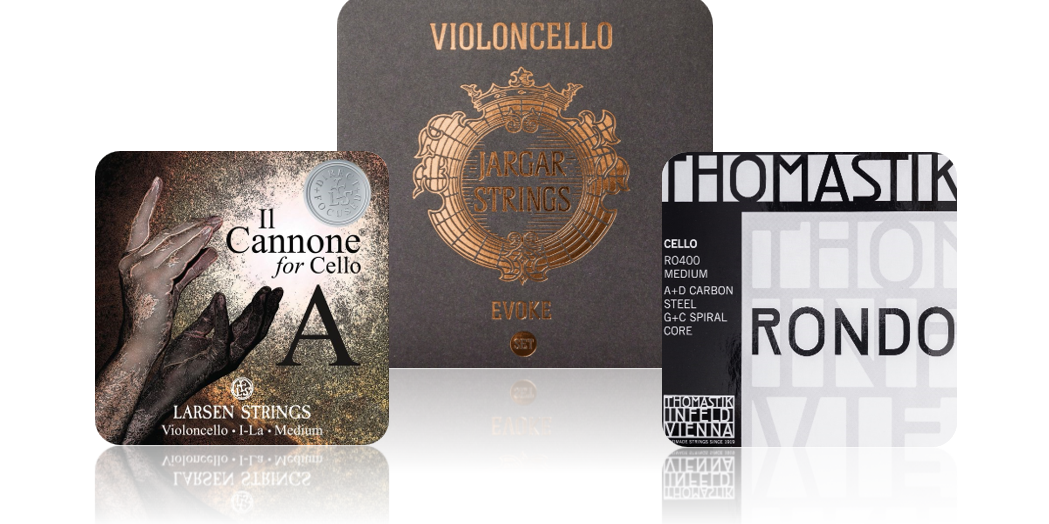
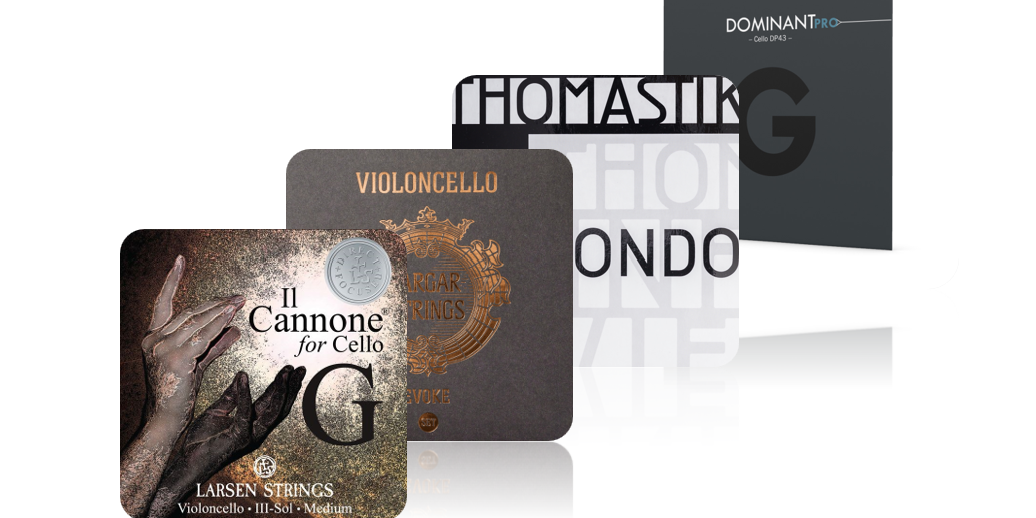
Choosing cello strings can be frustrating because a set that sounds fantastic on one cello may not work nearly as well on another.
I tested both Larsen Il Cannone Warm & Broad and Larsen Il Cannone Direct & Focused on the same 2017 Nathan Slobodkin cello. I also experimented with mixing individual strings from the two sets.
The differences were noticeable, but so were the similarities. In the end, the experience convinced me that choosing strings isn't always about finding the "best set." Sometimes the best setup is a combination of individual strings.
Larsen Il Cannone Warm & Broad
The name is a pretty good description of the sound.
The Warm & Broad set has a warm, expansive character, and two strings in particular stood out to me: the A and C.
The A string
The A was fantastic on this cello.
If your cello has a naturally bright or metallic-sounding A, this is where I think the Warm & Broad A becomes particularly interesting.
On the cello I tested, it really toned down the metallic quality that I have heard from other strings. Instead of pushing the A even brighter, it gave the string a warmer, more controlled character.
That's probably the first thing I'd think about if someone told me their cello's A string was too bright or metallic.
The C string
The C was the other standout.
It was extremely warm, with a big, enveloping quality. The best way I can describe the sound is almost like a bear hug.
It had the kind of warmth and body that made the lower register particularly enjoyable to play.
The C also had overtones that I really liked. That became especially noticeable when I later compared it with the Direct & Focused C.
The D and G
The D and G were good, but neither was particularly remarkable to me.
There was nothing about either string that I wanted to complain about. They worked well with the set, but compared with the A and C, they simply didn't stand out.
Larsen Il Cannone Direct & Focused
The Direct & Focused set takes the Il Cannone sound in a different direction.
Again, the name is fairly descriptive. Compared with Warm & Broad, I found the sound more direct and focused and, on this particular cello, brighter.
Because I tested both sets on the same 2017 Nathan Slobodkin cello, the difference between them was much easier for me to hear.
Ultimately, I took the Direct & Focused set off the cello because I found it too bright for that instrument.
The A string
The A was the main reason.
The cello already had enough brightness, and the Direct & Focused A pushed it farther in that direction than I wanted. It made the A a little too bright for my taste.
This was a particularly interesting contrast with the Warm & Broad A. On the same cello, the Warm & Broad A helped reduce the metallic quality, while the Direct & Focused A moved in the opposite direction.
The D string
I also found the D a little too bright on this cello.
Again, this is a comparison on this particular instrument—not a statement that the Direct & Focused D will be too bright on every cello.
The same characteristics that are too much on one cello may be exactly what another instrument needs.
The G string
The G was more interesting. It actually sounded fairly similar to the Warm & Broad G to me.
That led to one of the more useful discoveries from testing the two sets: the two versions don't necessarily have to be treated as completely separate packages.
The C string
The C was good, but compared with the Warm & Broad C, it lacked some of the overtones that I particularly liked from the Warm & Broad.
Warm & Broad vs. Direct & Focused
|
Warm & Broad |
Direct & Focused |
| A |
Warm, tones down metallic quality |
Brighter; too bright for this cello |
| D |
Good, nothing particularly notable |
A little too bright for this cello |
| G |
Good, balanced |
Similar to Warm & Broad G |
| C |
Extremely warm, broad, enveloping |
Good, but fewer of the overtones I liked |
| Overall |
My preference on this cello |
Too bright for this cello |
For this particular cello, Warm & Broad was the clear preference for me. The A and C were the biggest reasons.
Mixing the Two Il Cannone Sets
This is where things get interesting.
Larsen designed the Il Cannone family with the possibility of mixing and matching strings. The corresponding strings have similar tension characteristics, which makes experimenting with different combinations practical.
Rather than assuming you have to choose one complete set, you can look at the individual strings and ask:
What does my cello need?
In my testing, the Direct & Focused G mixed well with the Warm & Broad set.
I didn't particularly like the brightness of the Direct & Focused A and D on this cello, but the G worked well alongside the Warm & Broad strings.
So if I were building a setup from these two sets, I wouldn't necessarily say, "Warm & Broad is better than Direct & Focused."
I'd say: "The Warm & Broad strings worked better for this cello overall, but individual strings from the Direct & Focused set can still be useful."
Which Il Cannone Should You Try?
Based on my experience with both sets on the same cello, I'd start with Warm & Broad if your instrument has a naturally bright or metallic quality and you're looking for more warmth and breadth.
The Warm & Broad A was particularly impressive to me for controlling metallic qualities, while the Warm & Broad C was the standout for its deep, enveloping warmth.
The Direct & Focused set may make more sense if you're looking for a more direct and focused character, but on the 2017 Nathan Slobodkin cello I tested, I found the A and D too bright.
My experience doesn't mean one set is universally better. It means that, on the same cello, I preferred the Warm & Broad characteristics. Your cello may tell you something different.
You May Not Need a Completely New Set
One of the biggest things I took away from testing these strings is that you don't always need to think about cello strings as an all-or-nothing decision.
Maybe you love the A from one set and the C from another. Maybe your G works better with a different string. Maybe your cello needs more warmth on the A but more focus somewhere else.
That's where mixing and matching can become useful.
Instead of asking "Which cello string set is the best?" a better question may be "Which strings work best on my cello?"
Try Them on Your Own Cello
A string can sound completely different from one instrument to another. Even a description like "warm," "bright," "focused," or "powerful" can only tell you so much.
That's why SoundBox offers string trials.
Rather than buying an expensive set and hoping it works, you can try strings on your own cello, with your own bow, in your own playing environment.
Because ultimately, the only way to know whether a string is right for your cello is to hear it on your cello.
Find your sound. Try before you buy.
If you'd like to try these strings on your own cello, you can start a trial: Warm & Broad. or Direct & Focused.